
How to fix a lobby furniture budget before the RFQ
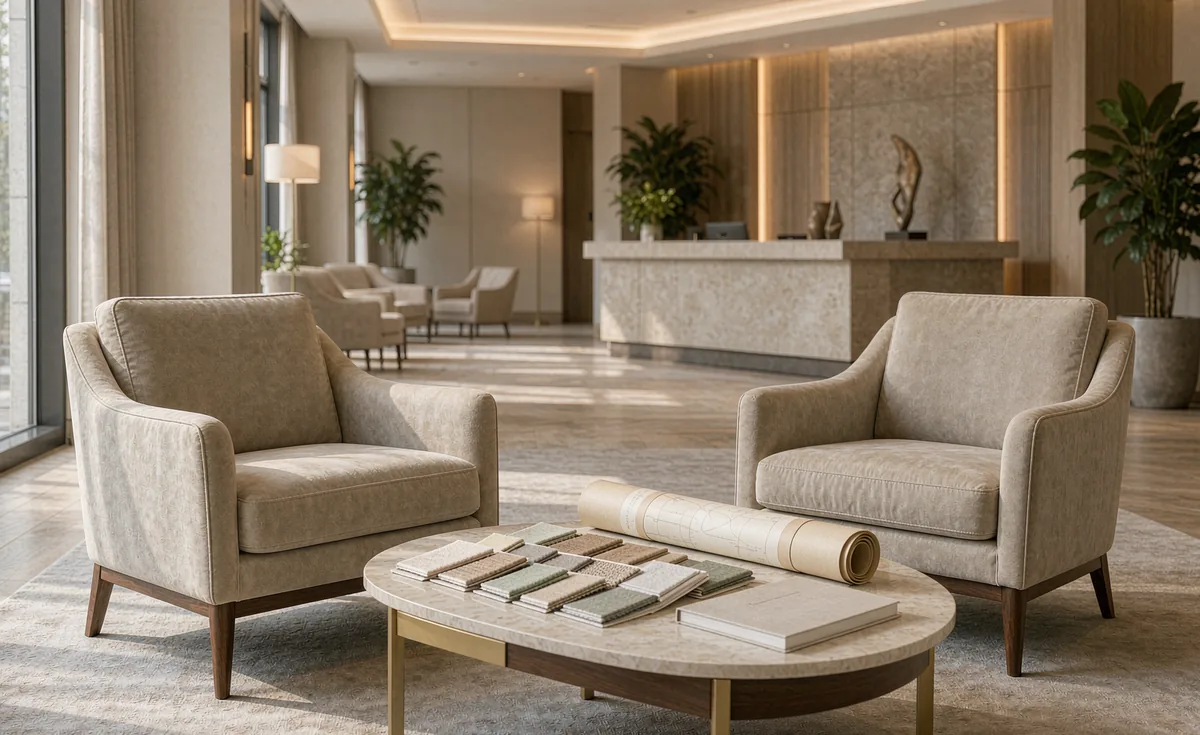
A lobby furniture budget is a spending ceiling split across entry, waiting, reception and bar zones. It is written before the RFQ is issued, so the quotes that come back can be compared on one basis.
- A budget is split by zone before the RFQ, not left as a single total.
- Upholstered seating takes the largest share: frame, filling and fabric are priced together.
- Tiering customisation by zone protects the budget without flattening the design.
- The RFQ carries a zone plan, a furniture-family list, dimensions, materials and acceptance criteria.
- Any open item is marked as an assumption with a written clarification path.
- A budget is a ceiling, not a guarantee: the conditions for re-pricing are written into the agreement.
Why fix the budget before the RFQ?
The lobby creates the first impression of a hotel, yet its furniture repeats far less than guest-room furniture: each position is made individually, so the price range is wide. If the budget is set after quotes arrive, every supplier answers to a different brief and the numbers cannot be compared.
Fixing the budget first also changes how decisions get made. Once the split by zone is known, material and customisation choices are driven by quality rather than by whatever the quotes happen to say.
Which zones should the budget be split across?
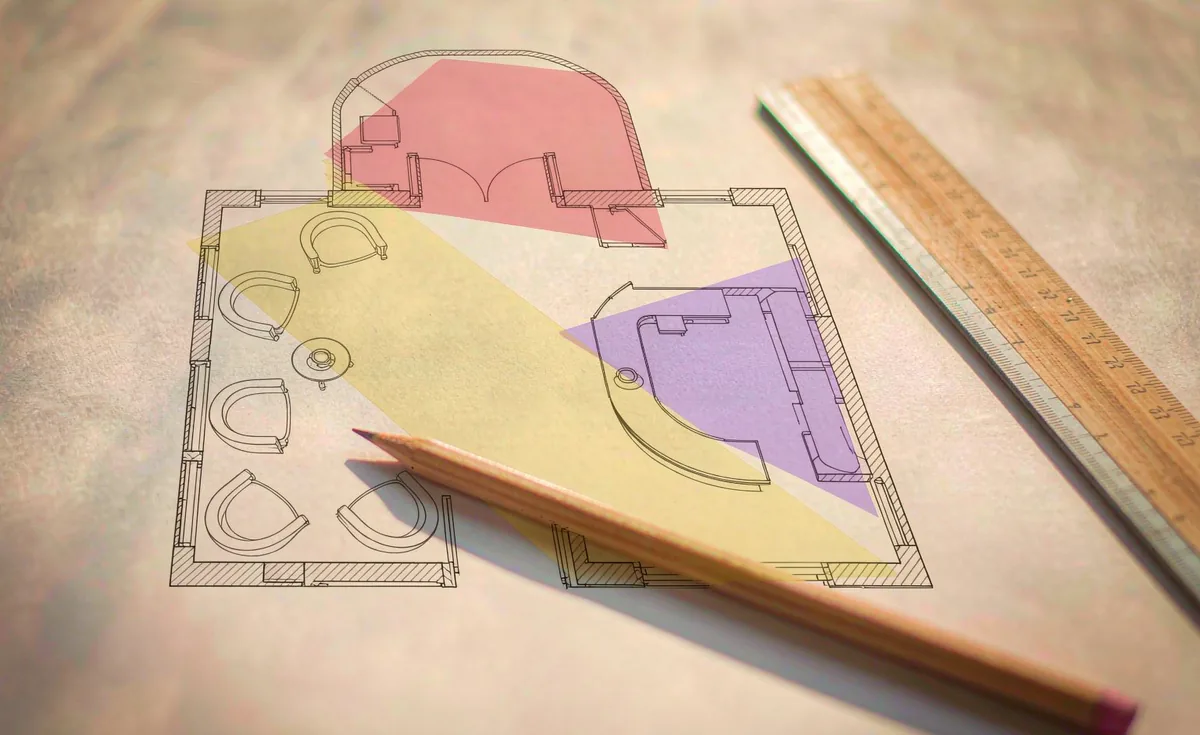
A lobby is not one room: entry, waiting, reception, lift lobby and bar or café areas each call for a different furniture family. Splitting the budget by zone shows which decision carries priority and where a saving is genuinely available.
Waiting-area sofas and armchairs host guests over time, while the reception desk is a workplace: ergonomics, cable routing and edge durability all apply. The budget structure should reflect that difference instead of averaging it away.
Which furniture families absorb the largest share?
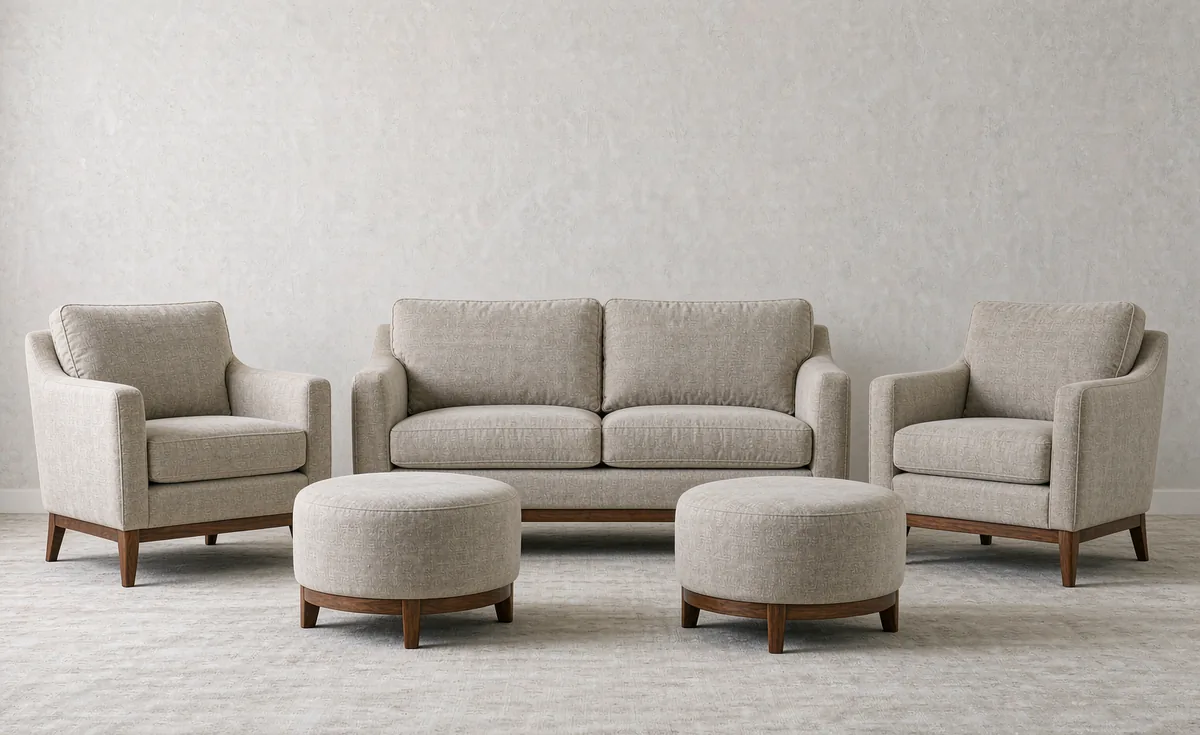
The largest share usually goes to upholstered seating — sofas, armchairs, ottomans — because the volume is large and frame, filling and fabric are priced together. Reception desks and side tables come next.
Decorative pieces and lighting take a small share of the budget but carry a large part of the visual result. Leaving them outside the budget is a false saving: the scheme is finished by those details.
How does the customisation level change the budget?
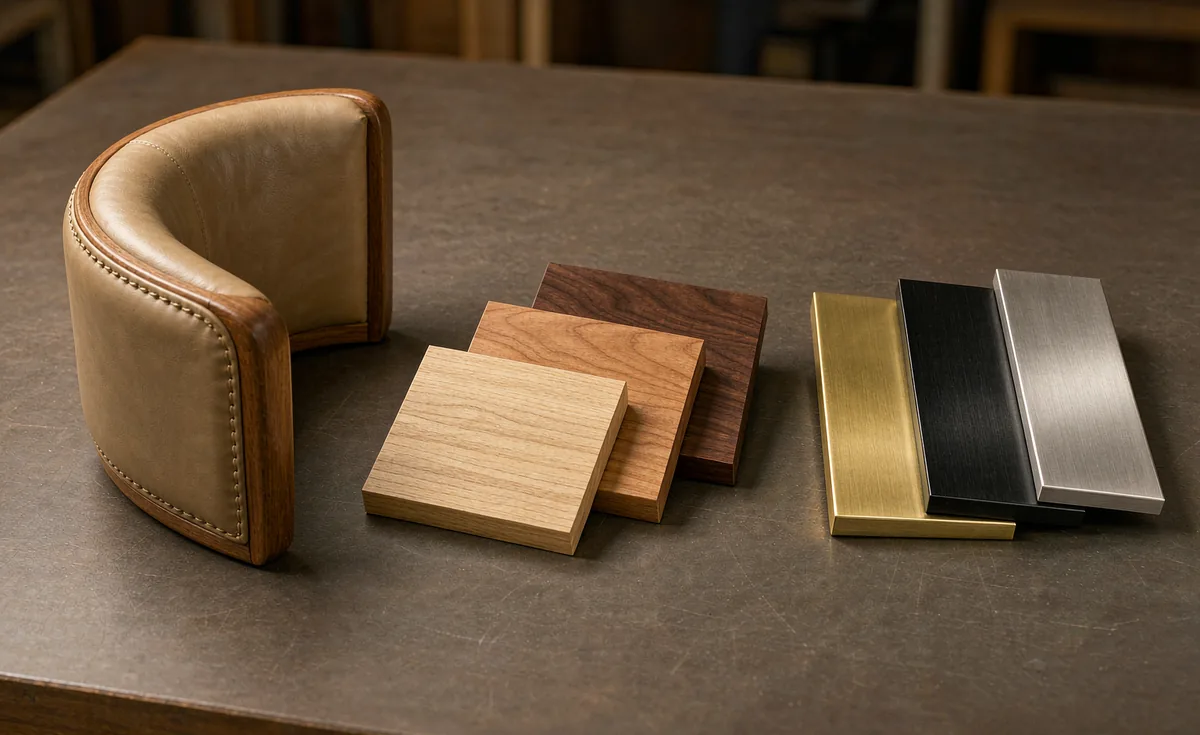
The further a piece moves from a standard size, the higher the customisation level: dimensions, proportions, upholstery stitching, timber species and metal finish each add their own drawing, sample and inspection step.
Tiering customisation by zone keeps the budget workable: guest-facing areas carry the higher level, while service and circulation areas use standard solutions. The visible result holds and the money goes where guests notice it.
Which documents should the RFQ carry?
The RFQ carries the zone plan, the furniture-family list, dimensions, material and finish direction, customisation level, packing method and acceptance criteria. When that list is complete, the quotes arrive on one basis and comparison is fast.
Any position still open is marked as an assumption with a written clarification path rather than left blank. Otherwise each supplier fills the gap with its own guess and the prices stop being comparable.
What risks remain once the budget is approved?
A budget is a ceiling, not a guarantee. Material prices, shipping terms and currency can move, so the agreement states the conditions under which a price is revisited. That clause makes later negotiation a procedure rather than an argument.
The second risk is specification change. If a zone or a position is added during the project, the budget is recalculated with it. Recording those changes in writing gives both sides a shared basis.
| Zone | Main furniture families | What moves the budget |
|---|---|---|
| Entry and waiting | Sofas, armchairs, side tables | Fabric type, filling density, customisation level |
| Reception desk | Desk, back panel, operator seat | Ergonomics, cable routing, edge durability |
| Lift lobby | Console table, mirror, lighting | Dimensional accuracy, wall-fixing method |
| Bar or café | Bar stools, high tables | Abrasion resistance, ease of cleaning |
Frequently asked questions
How should a lobby furniture budget be calculated?
Start by splitting into zones: list the furniture families and customisation level for each, then divide the ceiling across them. Exact figures depend on project size and specification, so the budget is confirmed against the quotes that come back.
How much furniture does a lobby need?
It depends on the floor area, the number of reception points and the seating plan. The reliable route is to issue a zone plan with seat counts in writing; the supplier then builds the position list from it.
Why do two quotes at the same budget look different?
Because the quotes may rest on different specifications: fabric type, filling density, frame material, packing and shipping terms. Comparing them means placing the specification of each position side by side.
Should the budget carry a contingency?
Yes, especially where positions are still open or materials are unverified. The amount is agreed between owner and supplier, and it belongs in the specification as its own line so it cannot be absorbed silently into other items.
Which materials raise the budget most?
Natural stone surfaces, solid timber and hand-worked metal parts most often do. Their cost sits in machining, edge finishing and packing as much as in the material itself, which is why concentrating them in accent zones pays off.
Can the budget be changed later?
It can, provided the change is recorded: which zone, which position, the reason, and whether it moves money out of another zone. The written trail is what keeps the project controllable.
What information is needed to confirm pricing?
A zone plan, dimensions, material and finish direction, customisation level and acceptance criteria. Without those, a price is an assumption and is likely to move later.
More articles

How the Canton Fair visa and invitation letter are arranged, how registration works, how many days a trip from Almaty or Tashkent needs, and how a factory visit fits into the changeover window — a step-by-step plan for Central Asian buyers. Visa decisions rest solely with the Chinese embassy or consulate.
Canton Fair hotels for 2026: which district to book in — Pazhou near the complex or the city centre — when to reserve, daily commuting by metro and taxi, and how to pace a fair day. A practical plan for Central Asian buyers.
Canton Fair 2026 travel guide for Central Asian buyers: pre-registration and invitation letter steps, flights and itinerary planning from Almaty and Tashkent, hotels near the venue and general customs notes.
Let's discuss your project
Send your plans, measurements or drawings — we prepare a commercial proposal.
Get a free quote