
China to Tashkent Furniture Logistics: The Rail Route Guide
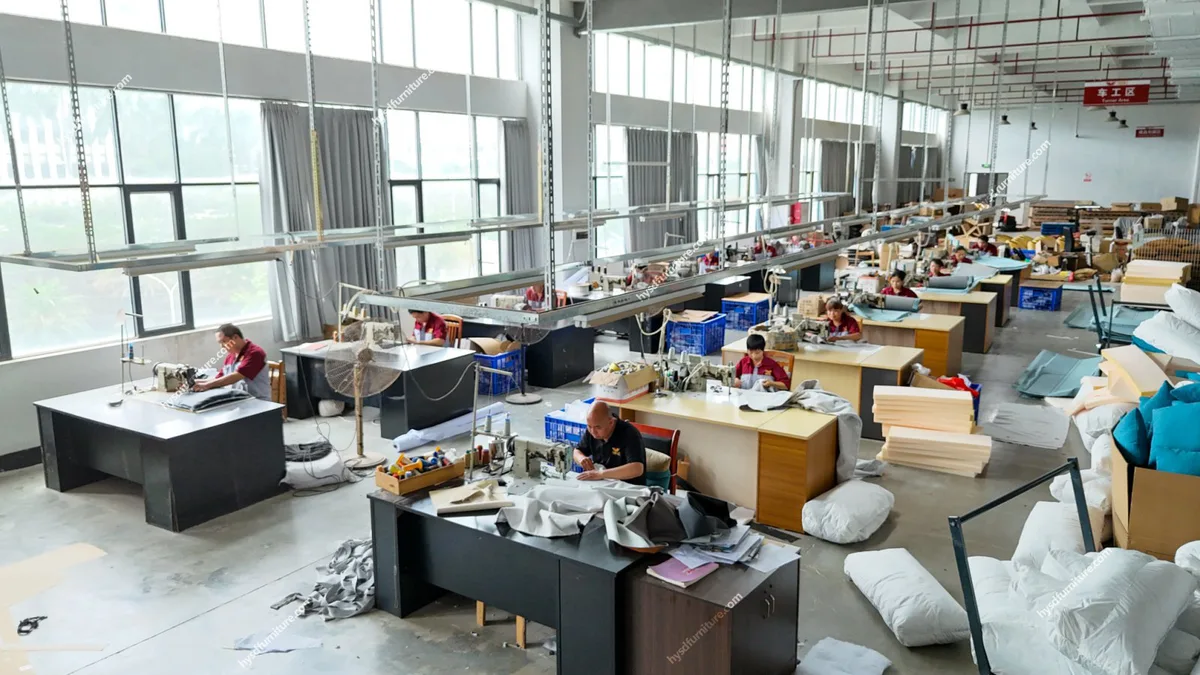
There are three main routes for shipping furniture from China to Central Asia: rail, TIR trucking and sea freight continued overland. Rail is the most balanced option across volume, cost and predictability; transit time depends on the route and the customs queue. TIR trucking via Khorgos serves urgent orders; transit time depends on the route and the customs queue.
- Rail is the most balanced scheme across volume and cost; transit time depends on the route and the customs queue
- TIR trucking via Khorgos suits urgent orders; transit time depends on the route and the customs queue
- Sea plus land freight offers the lowest unit cost but the longest transit
- EAC TR CU 025/2011 documents travelling with the cargo prevent customs delays
- The production schedule is confirmed with the order
Why Rail Is the Smartest Route from China to Tashkent
For China-Uzbekistan freight, rail has emerged as the leading scheme for large, medium-term and cost-predictable shipments. The train crosses the Khorgos border and follows the Kazakh trunk line to Tashkent; transit time depends on the route and the customs queue. This timing depends little on shipment volume or seasonality. For the furniture trade, that reliability is exactly what matters.
Furniture is bulky cargo that packs well in layered containers. A rail container carries a whole order, from dining table to floor-to-ceiling wardrobes, from one warehouse to another. The fewer times cargo is rehandled, the lower the risk to finished surfaces. Professional crating and corner protection complete the scheme.
When planning an order, build the production schedule and the transport leg backwards from your installation date. It is therefore smart to build the project calendar backwards from the installation date. According to 2026 industry research, rail schemes are becoming the dominant mode in China's export flow to Central Asia. When the manufacturer and logistics sit under one roof, hidden schedule risks disappear. Hotel projects move the same way: a complete hotel furniture batch travels in one container.
Three Shipping Schemes: Rail, TIR Trucking and Sea Plus Land
The rail scheme serves large, schedule-driven projects. A single container can carry a full apartment or a hotel fit-out; transit time depends on the route and the customs queue. Unit cost sits at a medium level while schedule predictability is high. For most interior projects, this is the most efficient balance.
TIR trucking crosses the Khorgos border crossing; transit time depends on the route and the customs queue. The scheme suits urgent mixed consignments, samples and replacement parts. When volume is small, trucking adds flexibility: cargo goes directly to the site. The trade-off is a higher unit cost than rail.
Sea freight starts from China's southern ports and continues overland via Caspian or Black Sea directions. Unit cost is the lowest, but the total transit is the longest and requires several mode changes. This scheme fits non-urgent, full-container projects. On projects without a fixed deadline, plan extra warehousing into the budget.
How EAC Documentation and Customs Actually Work
Furniture entering Uzbekistan and Kazakhstan must comply with the EAC TR CU 025/2011 technical regulation. The document confirms material safety, formaldehyde emission limits and mechanical strength. A manufacturer with export experience prepares these papers in advance and ships them with the cargo. This approach keeps the border crossing to a single day.
In customs procedures, the match between cargo papers and the declaration is decisive. Invoice, packing list and certificate of origin must align item by item. Mismatches mean not only schedule slip but also rising storage costs. Keeping document flow under the manufacturer's control is therefore the owner's strongest protection.
The certification documents required for the order are agreed and travel with the cargo. Tracking of every consignment is also provided. The buyer knows the border-crossing stage in advance. The full schedule, from production to installation, is compiled the moment the order is confirmed.
What Breaks in Furniture Transit and How to Prevent It
Most damage in furniture shipments appears not on the road but during rehandling. So when choosing a transport scheme, count the number of transfers. A rail container sends cargo over the long leg with a single loading. In trucking, full crating and load securing play the same decisive role.
Proper packing has three layers: the furniture itself is wrapped in foam and cloth, then foam corners are added, and finally a wooden crate. Glass and marble surfaces are labelled individually and fixed in the loading plan. For moisture-sensitive materials, desiccant packs are placed in the container. A photo report is made for every package, so the buyer sees the cargo before it departs.
If damage does occur, the fast fix is shipping replacement parts by TIR truck. Larger projects therefore always keep spare hardware and profiles on hand. In Hymebel projects, the packing scheme, photo report and spare-parts guarantee are part of the order contract.
How Should You Plan the Full Project Schedule?
Build the full schedule backwards from the installation date. The production schedule and transit time are confirmed with the order. Adding these steps defines the order confirmation date. Quality stays highest when the schedule is not under pressure.
Splitting large projects into phases is a valuable practice: first run one pilot consignment to review materials and execution level. The delivery planned for the Hilton Tashkent followed exactly this phased logic. The remaining volume then moves in batches. This approach reduces warehousing costs and clashes with the construction schedule.
For planning, drawings and freight pricing, message our project team on WhatsApp +86 18038813653 or write to z@hysdfurniture.com. Our team merges production, transport and customs steps into one schedule. You can explore our full catalogue on the custom furniture page. The result is a project with predictable timelines and no hidden costs.
| Mode | Transit to Tashkent | Cost level | Best suited for |
|---|---|---|---|
| Rail (via Khorgos and the Kazakh trunk line) | Route-dependent | Medium | Large volume, schedule-driven projects |
| TIR trucking (via Khorgos) | Route-dependent | Higher | Urgent, small and mixed consignments |
| Sea plus land | Longest, several transshipments | Lowest unit cost | Non-urgent full-container projects |
Frequently asked questions
How long does furniture take from China to Tashkent?
Transit time by rail or TIR truck depends on the route and the customs queue. Add the production schedule on top. The full schedule is compiled once the order is confirmed.
Are EAC documents provided with the shipment?
Yes, EAC TR CU 025/2011 documents travel with every consignment. Invoice, packing list and certificates are aligned with each other. This keeps customs delays to a minimum.
When does it make sense to ship urgently by truck?
TIR trucking makes sense for small mixed consignments, samples and replacement parts, via Khorgos. For large volumes, rail wins on cost and predictability. Combining both schemes is also possible.
How is furniture packed to survive transit?
Three-layer packing is used: foam and cloth wrap, foam corners, and a wooden crate. A photo report is made for every package and the loading plan is confirmed. Damaged parts are replaced by TIR truck.
More articles
A lobby budget is split by zone and furniture family before the RFQ goes out. This guide covers the budget structure, how customisation level changes it, and which documents make the quotes comparable.

How the Canton Fair visa and invitation letter are arranged, how registration works, how many days a trip from Almaty or Tashkent needs, and how a factory visit fits into the changeover window — a step-by-step plan for Central Asian buyers. Visa decisions rest solely with the Chinese embassy or consulate.
Canton Fair hotels for 2026: which district to book in — Pazhou near the complex or the city centre — when to reserve, daily commuting by metro and taxi, and how to pace a fair day. A practical plan for Central Asian buyers.
Let's discuss your project
Send your plans, measurements or drawings — we prepare a commercial proposal.
Get a free quote