
School Furniture Standards in Kazakhstan and Bulk Buying
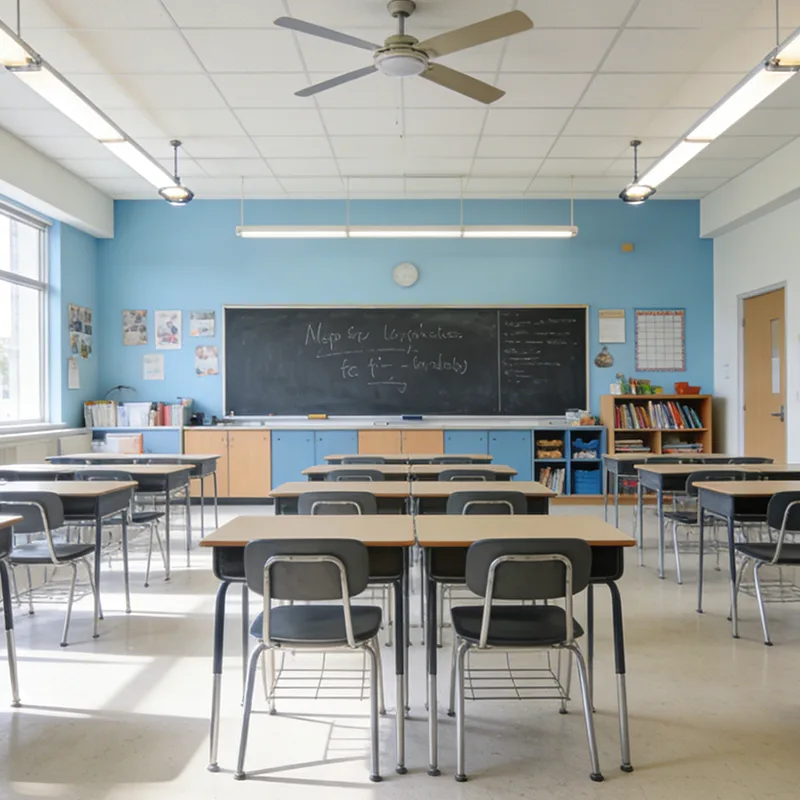
School furniture in Kazakhstan is a product category regulated by the EAC TR CU 025/2011 safety regulation and child-specific sanitary-ergonomic norms; bulk buying is structured by classroom sets and tied to the school-year calendar.
- EAC TR CU 025/2011 is the mandatory baseline: conformity documents, formaldehyde testing and Kazakh-Russian labeling are all required.
- Desk and chair heights follow pupil height groups, not age — see the table for the 52–76 cm norms.
- Structure tenders by classroom set and finish delivery 3–4 weeks before the school year: production takes 30–45 days.
Which standards govern school furniture in Kazakhstan?
School furniture supplied in Kazakhstan must comply with EAC TR CU 025/2011, the mandatory Customs Union technical regulation on furniture safety, together with national sanitary and ergonomic requirements for children's furniture. A batch without conformity documents cannot enter the country, and a school should never accept furniture without them regardless.
In practice this means three layers of verification: conformity documents (certificate or declaration under TR CU 025/2011), laboratory test reports covering formaldehyde emissions and mechanical safety, and labeling in Kazakh and Russian. Public tenders already require all three; private schools should mirror the same standard.
Hymebel has produced furniture on its 300,000 m² own factory since 1996 and holds EAC TR CU 025/2011 certification, supplying schools alongside offices and hotels across 50+ countries. Our education furniture programme covers classrooms, laboratories, libraries and canteens.
One subtlety that first-time buyers miss: conformity documents must name the importer correctly and match the invoice wording exactly, and a batch certificate must still be valid on the expected arrival date. Schools receiving furniture as a donation face the same border rules — a gift does not exempt anyone from conformity, and the receiving organisation should check documents with the same rigour as a paid tender.
Safety requirements for classroom furniture
Safety starts with materials. Boards and edge materials must meet formaldehyde emission limits, edges and corners are rounded, lifting mechanisms on desks and chair gas lifts must pass cycle testing, and surface coatings must be free of toxic finishes. Flame-retardant requirements apply to soft seating in libraries and common areas.
For children's furniture specifically, check four things on delivery: stable anti-tip bases on storage units, rounded corners on all tables, non-finger-trap hinges on lids and doors, and smooth, splinter-free finishes on all wood parts. A visual inspection per classroom takes minutes and catches most defects on the spot.
Documentation matters as much as hardware. Keep the conformity certificate, test reports and operating manuals in a school file — inspectors and parents' committees increasingly ask for them, and they are essential for warranty claims.
Maintenance shapes safety over time as well. Tighten casters and leveling feet each term, replace gas lifts that no longer hold height, and re-check storage anchoring after every room re-arrangement. A ten-minute routine per corridor each quarter keeps a classroom set compliant for its full service life.
Ergonomics: matching furniture to age groups
Kazakh schools follow height-based norms: desk and chair heights are matched to pupil height groups rather than to age alone. A mismatch forces a child into hunched postures for six hours a day, which teachers report as fatigue and reduced attention.
The reference table below follows widely used height groups. Where budgets allow, adjustable desks for grades 5–11 are worth the premium: one desk serves the whole growth range, and the school re-marks heights each September instead of re-buying furniture.
Ergonomics is not only height. Specify matte, low-glare work surfaces, chairs with a slight backward tilt for reading posture, and calm mid-tone colour schemes rather than saturated primaries that raise visual fatigue.
Ask suppliers to deliver furniture sorted by height group, not by product type. Crews then place desks room by room against a class list in a single pass, and the September height check becomes a five-minute task per classroom instead of a warehouse operation. The same sorting logic applies to storage units and teacher desks, which arrive labelled by floor in classroom-sized lots.
Bulk procurement: what experience shows
School procurement is quantified differently from office work: the unit is the classroom set — desks, chairs, a teacher's desk and board-adjacent storage — and tenders are sized in hundreds of sets. Quoting per classroom set rather than per item makes supplier comparison far easier.
Timing is the binding constraint. Delivery must fit school holidays, so plan the cycle to finish 3–4 weeks before the school year starts, counting a 30–45 day production window plus freight. Late deliveries in August cannot be compensated in September.
Contract for service, not just goods. Specify a written warranty of 24–36 months on structures, spare parts availability for gas lifts and casters, and packaging in classroom-sized lots so installation crews can distribute furniture floor by floor without re-sorting.
For imported batches, EAC documents and the packing list should be agreed before production: schools in Kazakhstan sit on Customs Union territory, so the same documentation discipline applies in full as for any commercial import.
Plan next year's classrooms now
Send the number of classrooms, the grade range and the target handover date to our project team — we return a per-classroom-set quotation, the 30–45 day production window and a delivery plan matched to your holiday schedule. WhatsApp +86 18038813653 · z@hysdfurniture.com.
Hymebel has supplied education projects since 1996 from its 300,000 m² factory, with EAC TR CU 025/2011 certification and delivery across 50+ countries. A quotation costs nothing and gives your tender committee real numbers to work with.
One more tip for tender documents: require sample approval as a contract annex. A physical desk and chair set, sealed and signed by both sides, prevents the quiet substitution of thinner boards or lighter frames that occasionally happens between contract and delivery.
| Grade / height group | Pupil height (cm) | Desk height (cm) | Chair height (cm) |
|---|---|---|---|
| Grades 1–2 | 115–130 | 52 | 30 |
| Grades 3–4 | 130–145 | 58 | 34 |
| Grades 5–6 | 145–160 | 64 | 38 |
| Grades 7–9 | 160–175 | 70 | 42 |
| Grades 10–11 | 175 and above | 76 | 46 |
Frequently asked questions
Is EAC certification mandatory for school furniture in Kazakhstan?
Yes. School furniture is furniture, so EAC TR CU 025/2011 conformity documents are mandatory before customs clearance: a certificate or declaration supported by accredited laboratory test reports. Check that the reports cover children's product groups and that labeling is in Kazakh and Russian.
What desk height suits which grade?
Desk height follows pupil height groups: 52 cm for grades 1–2 (115–130 cm), 58 cm for grades 3–4 (130–145 cm), 64 cm for grades 5–6 (145–160 cm), 70 cm for grades 7–9 (160–175 cm) and 76 cm for grades 10–11 (175 cm and above). Chair heights scale accordingly.
How long does a bulk school order take?
Production runs 30–45 days from drawing approval, plus freight to Kazakhstan of roughly 5–7 days by road. Plan the whole cycle to finish 3–4 weeks before the school year starts, and place the order early enough to stay inside the holiday window — in most cases by mid-summer.
What warranty should a school demand?
A written warranty of 24–36 months on structures is a fair standard for contract-grade school furniture, together with spare parts availability for gas lifts, casters and hinges. Fix the warranty terms in the contract rather than in a brochure, and keep the test reports on file for claims.
More articles
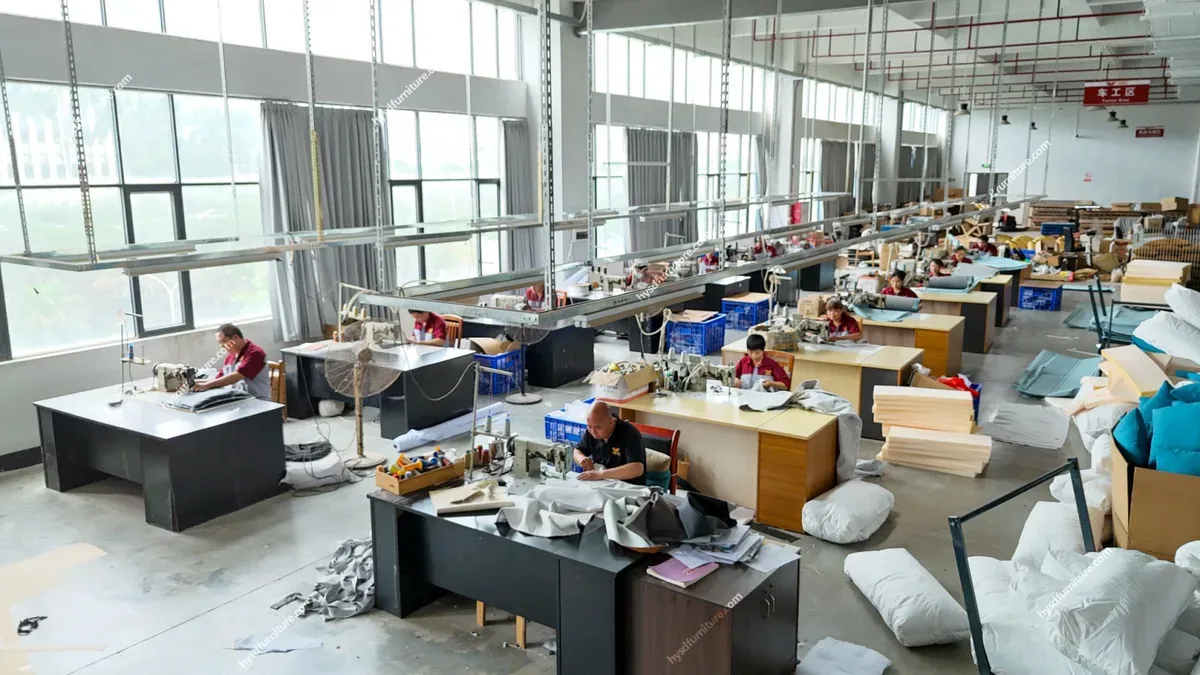
How MOQ forms at a Chinese furniture factory, what drives the unit price, and how rail and sea freight shape landed cost — a plain guide for importers.
Solid wood or veneer for Central Asia's dry continental climate? Lifespan, maintenance and price compared, plus the hybrid build we recommend.

Hotel lobby trends for 2026: statement marble and wood pieces, contract-grade durability and the Kazakhstan–Uzbekistan taste divide — a review by Hymebel.
Let's discuss your project
Send your plans, measurements or drawings — we prepare a commercial proposal within 48 hours.
Get a free quote